
Slow Cooker Recipes: Easy Meals, Less Effort!
Family-friendly dishes for busy people — quick prep, delicious results.
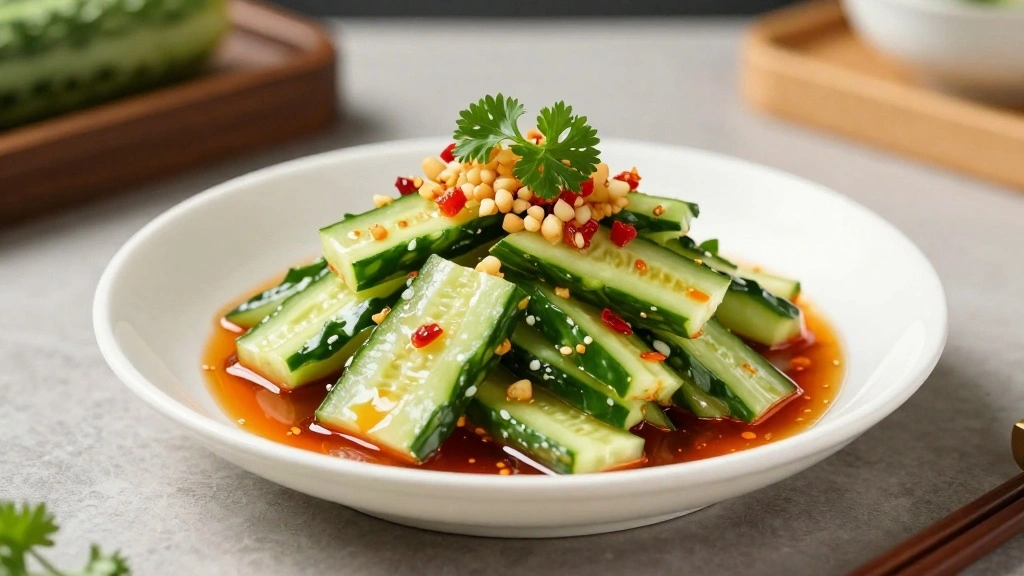
Grab yours for $4The Chinese Cucumber Salad with Garlic and Chili Oil is a refreshing dish that bursts with vibrant flavors.
The crispness of the cucumbers pairs beautifully with the fiery kick of the chili oil and the aromatic depth of garlic.
I first encountered this salad during a summer festival in Beijing, where it was served as a cooling counterpoint to the hot weather.
With its straightforward preparation, this dish is perfect for a quick lunch or as a zesty side to complement a larger meal.
Whether you’re new to Chinese cuisine or a seasoned enthusiast, this salad is sure to become a staple in your culinary repertoire.
The History and Cultural Significance
• Chinese Cucumber Salad traces its origins to the Sichuan province, known for its bold and spicy flavors.
• The dish evolved over decades as Sichuan chefs experimented with different levels of heat, eventually becoming the beloved version we know today.
• In Chinese culture, this dish traditionally appears at summer feasts, symbolizing refreshment and balance amidst the heat.
• While many variations exist across different regions, the authentic version maintains a balance of heat and coolness that sets it apart from imitations.


Recipe Overview
Nutritional Information (per serving)
Essential Equipment Guide
Mandoline Slicer: A mandoline slicer is crucial for achieving uniformly thin slices of cucumber, which ensures even marination and texture. Alternatives like a sharp chef’s knife can work, but may require more skill for consistency.
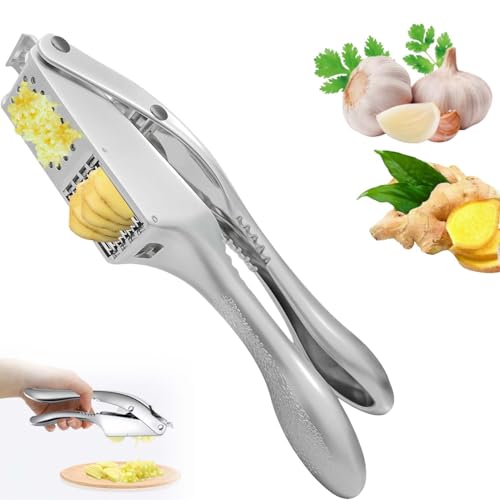
Mortar and Pestle: This tool is essential for crushing garlic to release its full flavor without turning it bitter, a characteristic that can occur with over-processed garlic from a garlic press. A small food processor can be a substitute if used carefully.
Mixing Bowl: A large mixing bowl is necessary to combine the cucumbers and dressing evenly. Glass or ceramic is preferred to prevent any reaction with the acidic ingredients in the dressing.


Ingredients
For the Salad
|
| Amount | Ingredient | Notes |
|---|---|---|
| 2 medium | cucumbers | sliced thinly |
| 1 teaspoon | salt | to draw out excess moisture |
For the Dressing
| Amount | Ingredient | Notes |
|---|---|---|
| 3 tablespoons | chili oil | adds heat and flavor |
| 2 cloves | garlic | crushed for depth |
| 1 tablespoon | soy sauce | provides umami |
| 1 teaspoon | sugar | balances the heat |
| 1 teaspoon | rice vinegar | adds acidity |
For Garnish
| Amount | Ingredient | Notes |
|---|---|---|
| 1 teaspoon | sesame seeds | toasted for nuttiness |
| 1 tablespoon | fresh cilantro | chopped for freshness |


Preparation Methods
Salting Cucumbers: Salting cucumbers is key for drawing out excess moisture, ensuring a crisp texture. Sprinkle salt evenly over sliced cucumbers and let them sit for at least 10 minutes before rinsing and patting dry.
Crushing Garlic: Using a mortar and pestle to crush garlic releases its oils and enhances its flavor. This technique prevents the garlic from becoming bitter, which can happen if it's over-processed.
Mixing Dressings: Properly emulsifying the dressing ingredients by whisking them together ensures a uniform coating on the cucumbers, enhancing flavor distribution and mouthfeel.



Step 1: Prepare Cucumbers
Wash the cucumbers thoroughly under running water.
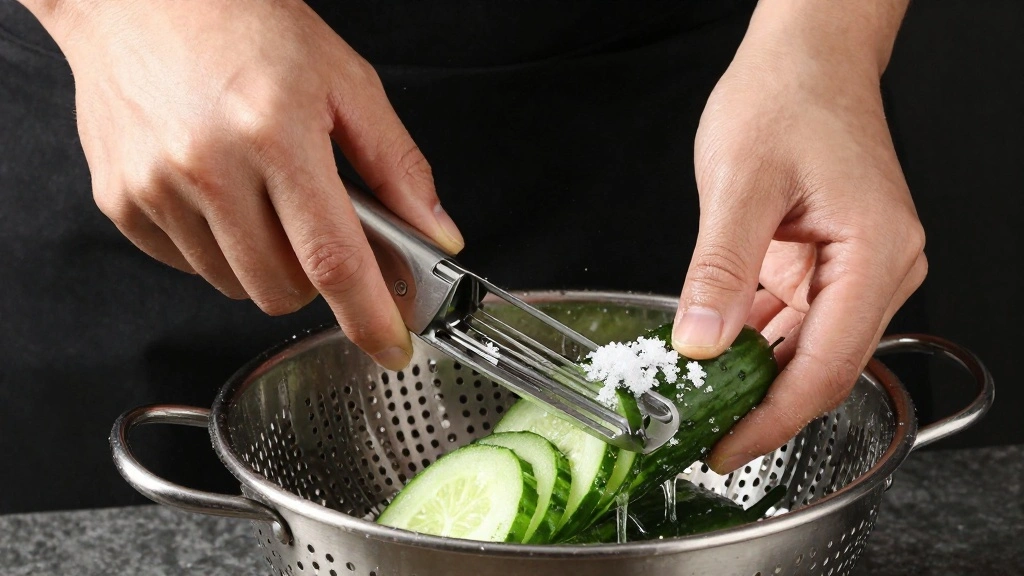
Slice the cucumbers thinly using a mandoline slicer for even thickness.
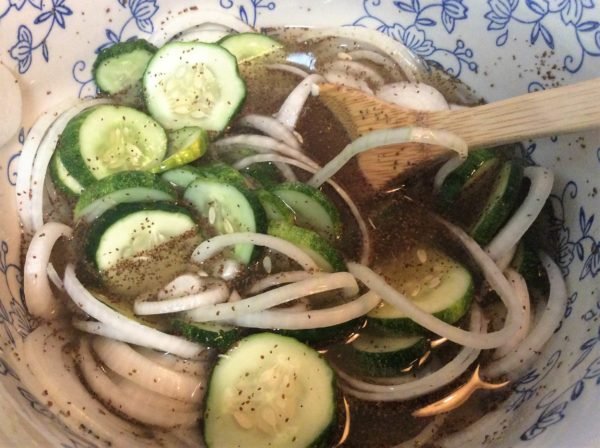
Place the sliced cucumbers in a colander and sprinkle with salt.
Allow the cucumbers to sit for 10 minutes to draw out excess moisture.
Step 2: Crush Garlic
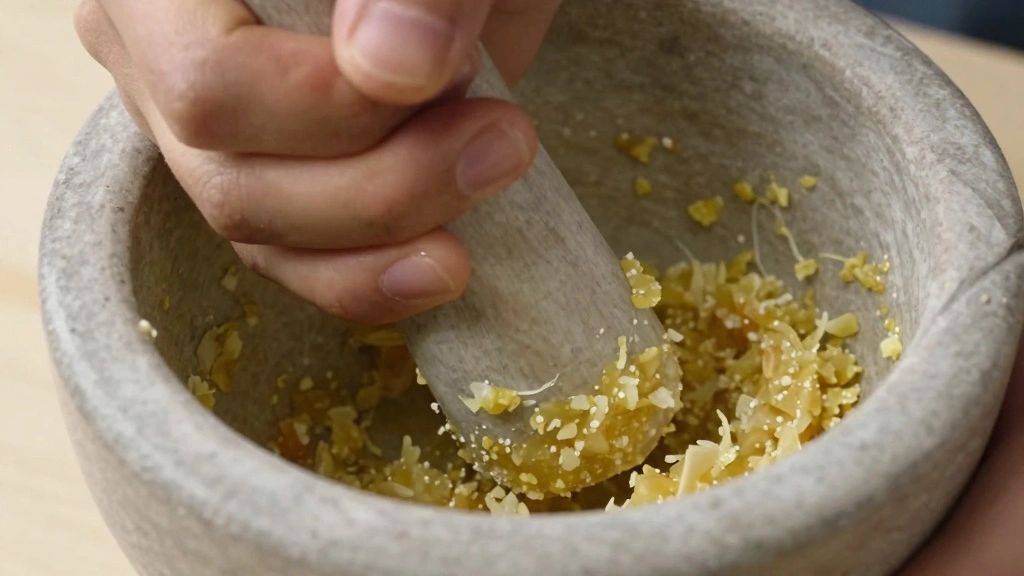
Peel the garlic cloves and place them in a mortar.
Use the pestle to crush the garlic until it forms a paste.
Ensure the garlic is thoroughly crushed to release its oils.
Transfer the garlic paste to a small bowl for later use.

Step 3: Mix Dressing Ingredients
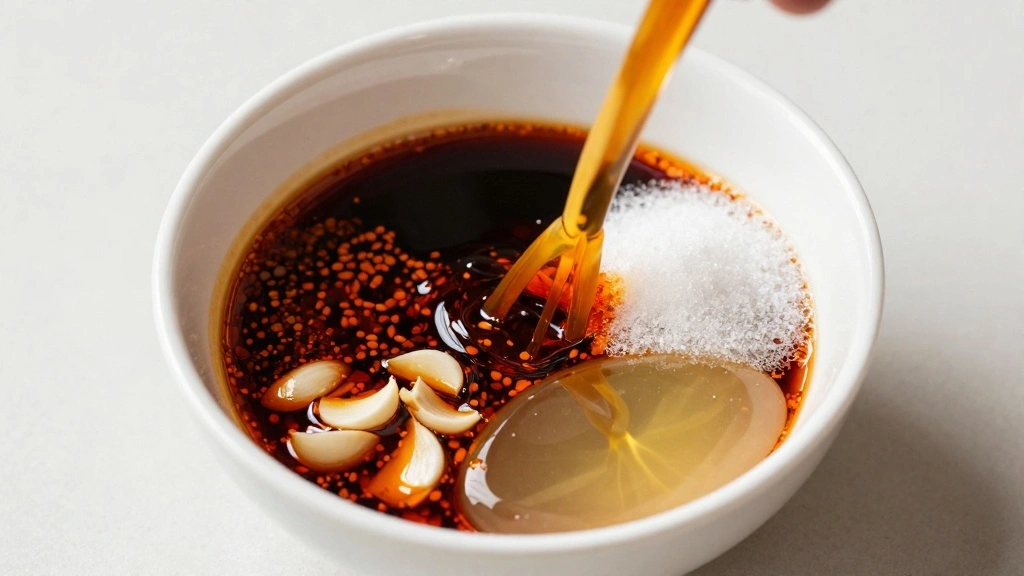
In a small bowl, combine chili oil, soy sauce, sugar, and rice vinegar.
Add the crushed garlic paste to the mixture.
Whisk the ingredients together until well emulsified.
Taste the dressing and adjust seasoning if necessary.


Step 4: Rinse and Dry Cucumbers
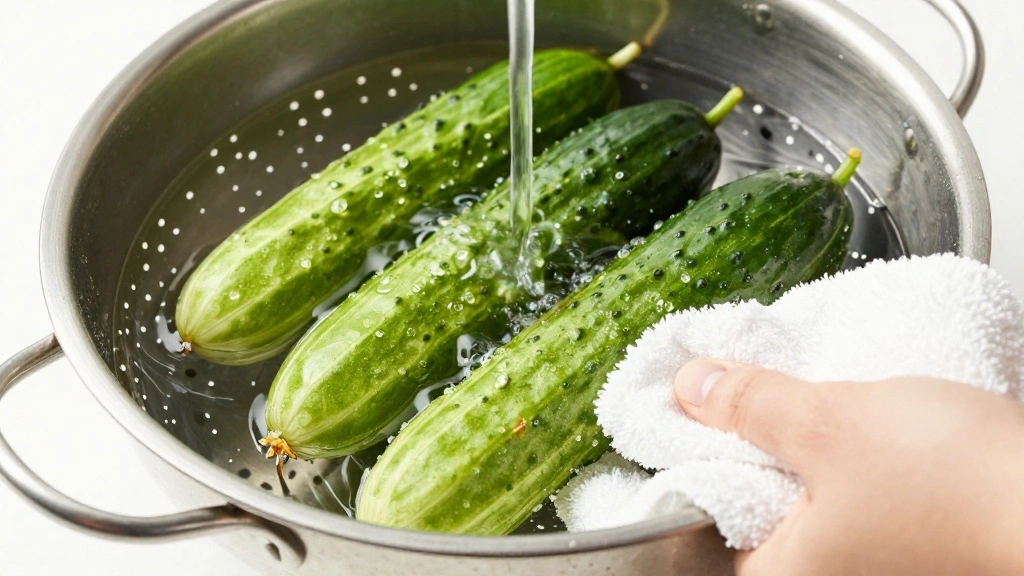
Rinse the salted cucumbers under cold water to remove excess salt.
Pat the cucumbers dry with a clean kitchen towel.
Ensure cucumbers are thoroughly dried to prevent dilution of the dressing.
Transfer the dried cucumbers to a large mixing bowl.
Step 5: Combine Salad Ingredients
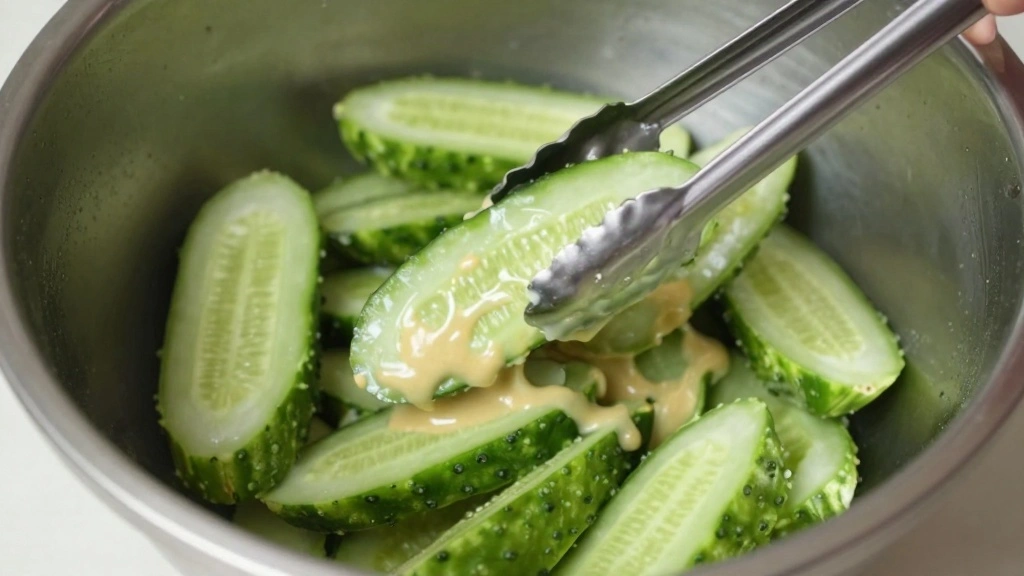
Pour the dressing over the cucumbers in the mixing bowl.
Toss the cucumbers gently to coat them evenly with the dressing.
Ensure all slices are well covered for maximum flavor.
Let the salad sit for 5 minutes to absorb flavors.


Step 6: Garnish the Salad
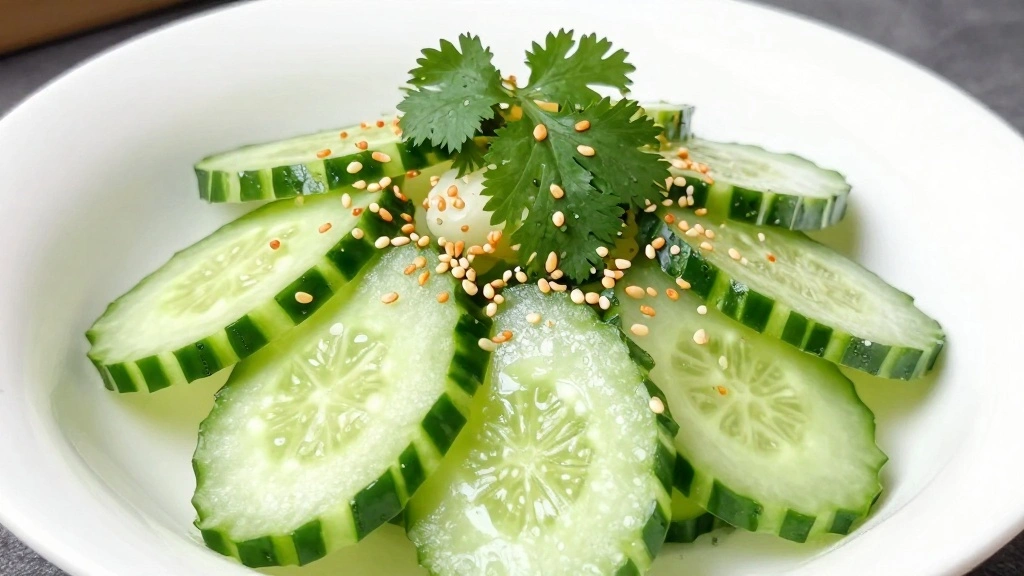
Sprinkle toasted sesame seeds over the salad for added texture.
Add freshly chopped cilantro on top for a burst of freshness.
Ensure garnishes are evenly distributed for a balanced flavor.
Serve the salad immediately or chill briefly for enhanced taste.


Critical Timing and Temperature Guide
Salting Cucumbers: Allow cucumbers to sit with salt for exactly 10 minutes. Look for a slight wilting as an indicator of moisture removal. Avoid over-salting to prevent them from becoming too salty.
Mixing Dressing: Whisk the dressing for at least 1 minute until emulsified. Look for a cohesive mixture without separation. Avoid under-mixing as this results in uneven flavor distribution.
Serving Temperature: Serve the salad chilled or at room temperature. Look for a crisp and refreshing texture. Avoid serving too cold as it may dull the flavors.


Pro Tips for Chinese Cucumber Salad
• Ingredient Selection: Choose firm, fresh cucumbers for the best texture. English cucumbers are ideal due to their lower water content and fewer seeds.
• Preparation Secret: Slightly bruising the cucumbers before slicing can help them absorb the dressing more effectively.
• Temperature Management: Ensure cucumbers are at room temperature before salting, as this helps in drawing out moisture more efficiently.
• Texture Enhancement: Rinsing and thoroughly drying the cucumbers after salting ensures they remain crisp and not soggy.
• Flavor Layering: Toast the sesame seeds before adding them to enhance their nutty flavor, which complements the salad.
• Make-Ahead Strategies: Prepare the dressing a day in advance to allow flavors to meld, storing it in an airtight container in the fridge.
• Restaurant-Quality Finishing Touches: Add a few drops of sesame oil before serving for a rich, aromatic finish.
• Equipment Optimization: Using a mandoline slicer makes slicing faster and ensures uniform thickness for even marination.
Troubleshooting Common Issues
• Cucumbers Too Soggy: This might be due to inadequate drying after salting. Ensure you pat the cucumbers thoroughly dry before adding the dressing.
• Flavors Unbalanced: If the salad tastes too salty or too acidic, adjust by adding a pinch of sugar or a splash of water to balance flavors.
• Garlic Overpowering: If the garlic flavor is too strong, ensure it's crushed properly to prevent bitterness and use smaller cloves for milder flavor.
• Missing Heat: If the salad lacks heat, consider adding more chili oil or a pinch of red chili flakes.
• Dressing Separation: If the dressing separates, whisk it again vigorously before pouring over the cucumbers.
• Bland Taste: Ensure cucumbers are adequately salted at the beginning to enhance overall flavor.
Variations and Regional Differences
• Sichuan Style: Includes Sichuan peppercorns for a numbing heat that complements the chili oil, creating a more complex flavor profile.
• Cantonese Variation: Uses less chili oil and more soy sauce, focusing on a savory and umami-rich profile with hints of sweetness.
• Shandong Version: Incorporates raw peanuts for added crunch and a drizzle of black vinegar for a tangy depth.
• Modern Fusion: Some chefs add avocado slices for creaminess or replace soy sauce with tamari for a gluten-free option.
Food Science Behind the Recipe
• Osmosis in Salting: Salting the cucumbers draws out water through osmosis, concentrating their flavor and ensuring they remain crisp.
• Emulsion Stability: Properly whisking the dressing ingredients creates an emulsion, which ensures the oil and vinegar mix consistently, coating the cucumbers evenly.
• Flavor Release from Garlic: Crushing garlic releases allicin, enhancing its flavor profile. Understanding this chemical reaction helps achieve the desired aromatic depth.


Frequently Asked Questions
What's the most common mistake people make when preparing Chinese Cucumber Salad? The most common mistake is not drying the cucumbers thoroughly after salting, which can lead to a soggy salad.
Can I use regular cucumbers instead of English cucumbers? Yes, but you may need to remove the seeds and extra moisture as regular cucumbers have higher water content.
Is there a way to make this salad less spicy? You can reduce the amount of chili oil or use a milder chili oil to control the heat level.
How long can I store the salad? The salad is best consumed fresh, but it can be stored in the refrigerator for up to 24 hours. The cucumbers may lose some crispness over time.
Can I prepare the components in advance? Yes, you can prepare the dressing a day ahead and store it in the fridge. Mix it with the cucumbers just before serving.
What if I don't have a mandoline slicer? A sharp chef's knife can be used to slice the cucumbers, but aim for even thickness for consistent texture.
How can I add more protein to this salad? Consider adding cooked shrimp or tofu for a protein boost without altering the core flavors.
What type of chili oil is best? Look for Sichuan-style chili oil, which often includes additional spices for a robust flavor profile.
Serving and Presentation Guide
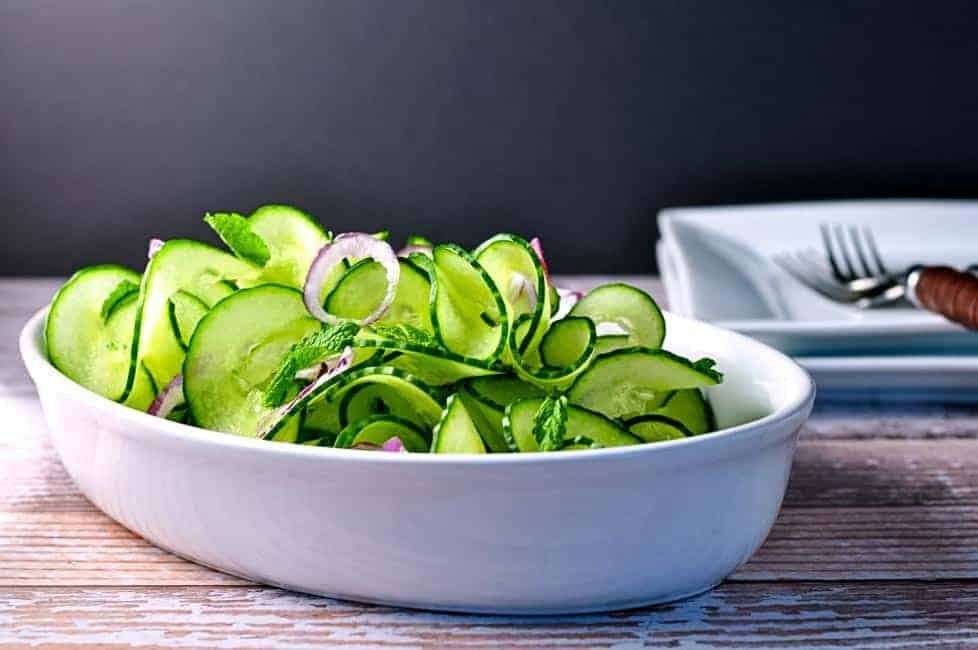
• Traditional Presentation: Serve the salad in a shallow bowl, allowing the vibrant colors of the cucumbers and garnishes to stand out.
• Modern Plating: Arrange the cucumber slices in a circular pattern on a plate, drizzle with dressing, and garnish.
• Party Presentation: Serve in individual small bowls or cups for easy handling at gatherings.
• Family Style: Present on a large platter for sharing, with extra dressing and garnishes on the side.
Conclusion

The Chinese Cucumber Salad with Garlic and Chili Oil offers a delightful blend of textures and flavors that is both refreshing and satisfying.
Whether you are new to this dish or revisiting an old favorite, it's versatility and ease of preparation make it a must-try.
I encourage you to explore this recipe and make it your own by experimenting with the variations and tips provided.
Enjoy the journey of discovering new tastes and textures with this beloved Chinese classic.