

Slow Cooker Recipes: Easy Meals, Less Effort!
Family-friendly dishes for busy people — quick prep, delicious results.
Grab yours for $4Healthy Breakfast Egg Muffins are the perfect start to your day, blending convenience with nutrition in a bite-sized form.
Their savory flavor profile, with notes of vegetables and cheese, creates a satisfying breakfast option that’s both low-carb and delicious.
I stumbled upon these delightful muffins while experimenting with quick breakfast ideas that wouldn’t compromise on taste or health.
They’re ideal for busy mornings when you need something nutritious yet easy to prepare.
These muffins are versatile enough to be customized with your favorite ingredients, making them a family favorite.
Whether you’re rushing to work or enjoying a leisurely morning, these egg muffins are a fantastic choice.
The History and Cultural Significance
• Healthy Breakfast Egg Muffins trace their origins to the early 2000s, where they were initially created as a convenient, portable breakfast solution.
• The dish evolved over decades as variations with different vegetables, meats, and cheeses were introduced, eventually becoming the beloved version we know today.
• In Western cultures, this dish traditionally appears at brunch gatherings, symbolizing a casual and hearty meal that brings people together.
• While many variations exist across different regions, the authentic version maintains a fluffy egg base that sets it apart from imitations.


Recipe Overview
Nutritional Information (per serving)
Essential Equipment Guide
Muffin Tin: A non-stick muffin tin is crucial for achieving perfectly shaped muffins that are easy to remove. Silicone alternatives can also work but may not provide the same crisp edges.
Mixing Bowl: Use a large mixing bowl to easily combine all ingredients without spilling, ensuring even distribution of flavors.
Whisk: A sturdy whisk helps achieve a smooth, lump-free egg mixture. If unavailable, a fork can be an alternative, though it may require more effort.


Ingredients
For the Base
|
| Amount | Ingredient | Notes |
|---|---|---|
| 8 large | eggs | provides the foundation for the muffins |
| 1/4 cup | milk | adds creaminess and helps bind ingredients |
Vegetables
| Amount | Ingredient | Notes |
|---|---|---|
| 1 cup | spinach | chopped, adds nutrients and color |
| 1/2 cup | bell peppers | diced, contributes sweetness and crunch |
| 1/4 cup | red onion | finely chopped, offers a mild tang |
| 1/4 cup | tomatoes | seeded and diced, adds juiciness |
Seasonings
| Amount | Ingredient | Notes |
|---|---|---|
| 1 teaspoon | salt | enhances overall flavor |
| 1/2 teaspoon | black pepper | adds mild heat |
Cheese
| Amount | Ingredient | Notes |
|---|---|---|
| 1/2 cup | cheddar cheese | shredded, adds richness and flavor |


Preparation Methods
Chopping Vegetables: Properly chop vegetables into uniform sizes to ensure even cooking and distribution in the muffins. Take your time to dice them finely for a balanced bite.
Whisking Eggs: Vigorously whisk the eggs until the yolks and whites are completely combined, which ensures a consistent texture in the muffins. Aim for a slightly frothy mixture.
Filling Muffin Tins: Pour the mixture into the muffin tins evenly, filling each about two-thirds full. This allows the muffins to rise properly without overflowing.



Step 1: Prepare Ingredients
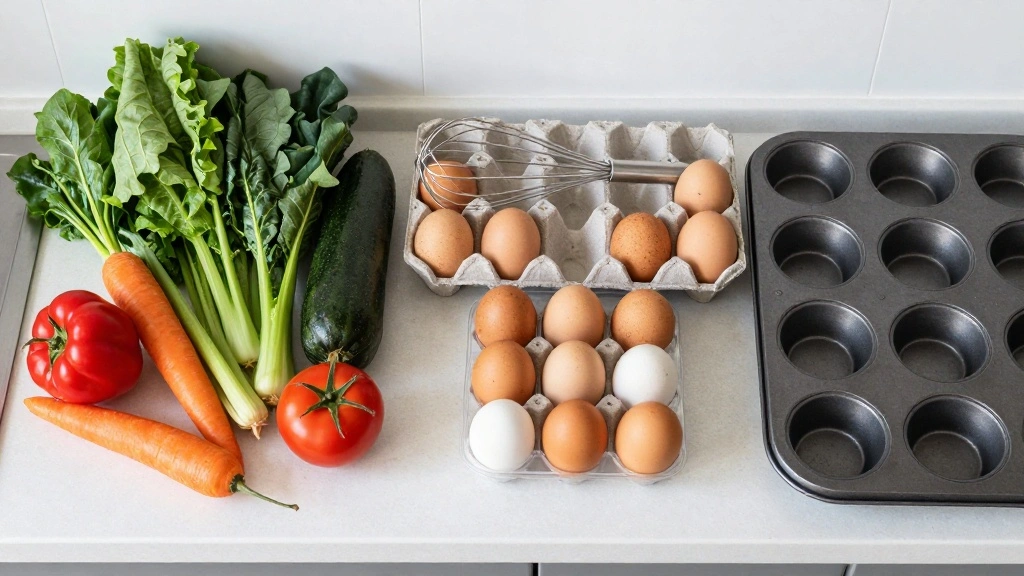
Gather all your ingredients and equipment to ensure a smooth cooking process.
Wash and dry the vegetables thoroughly before chopping.
Measure out all ingredients according to the recipe to maintain accuracy.
Preheat your oven to 375°F (190°C) to prepare for baking.



Step 2: Chop Vegetables
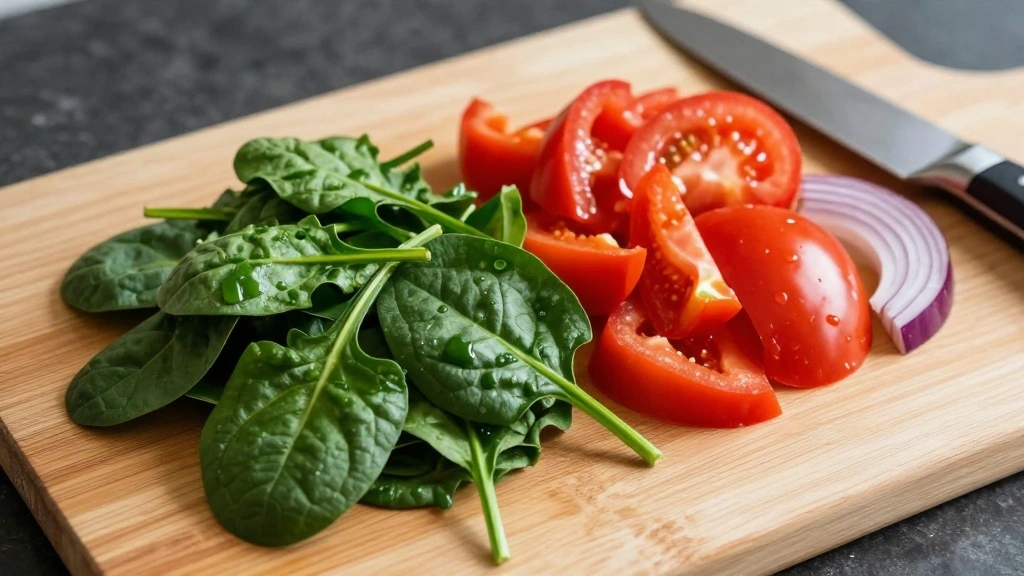
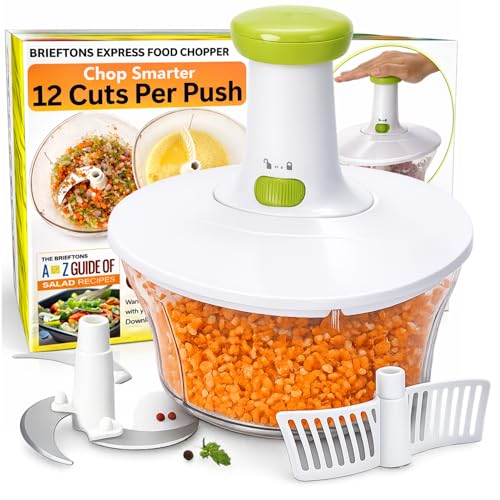
Chop the spinach, bell peppers, tomatoes, and red onion into small, uniform pieces.
Ensure the vegetables are dry to prevent excess moisture in the muffins.
Use a sharp knife for precise cuts and to avoid bruising the vegetables.
Place all chopped vegetables in a mixing bowl.


Step 3: Whisk Eggs
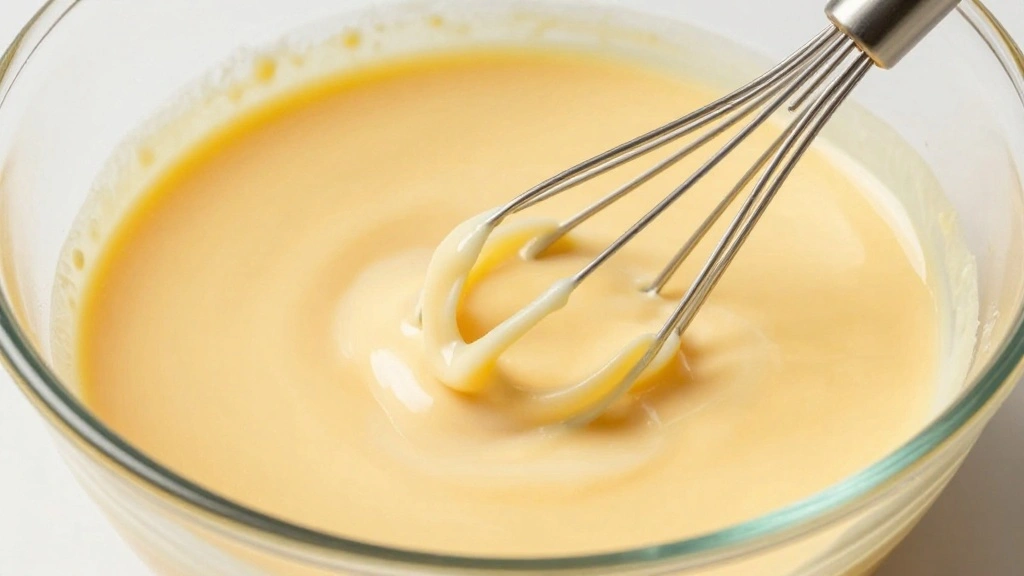
Crack the eggs into a large mixing bowl, ensuring no shell fragments are included.
Add the milk, salt, and black pepper to the eggs.
Use a whisk to beat the mixture until it is smooth and slightly frothy.
Make sure the yolks and whites are completely combined.
Step 4: Combine Ingredients
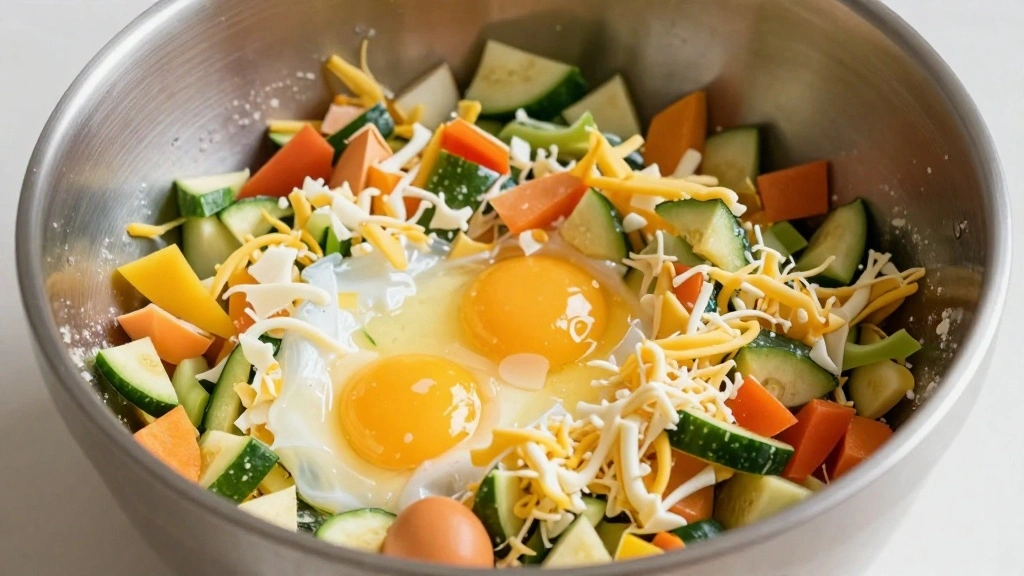
Add the chopped vegetables to the egg mixture in the bowl.
Sprinkle the shredded cheddar cheese evenly over the top.
Gently fold the ingredients together until just combined.
Avoid over-mixing to prevent a dense muffin texture.


Step 5: Prepare Muffin Tin

Lightly grease the muffin tin with cooking spray or olive oil to prevent sticking.
Ensure each cup is fully coated, reaching the top edges.
Place the muffin tin on a stable surface for easy filling.
Position it close to the mixing bowl to minimize spills.
Step 6: Fill Muffin Cups
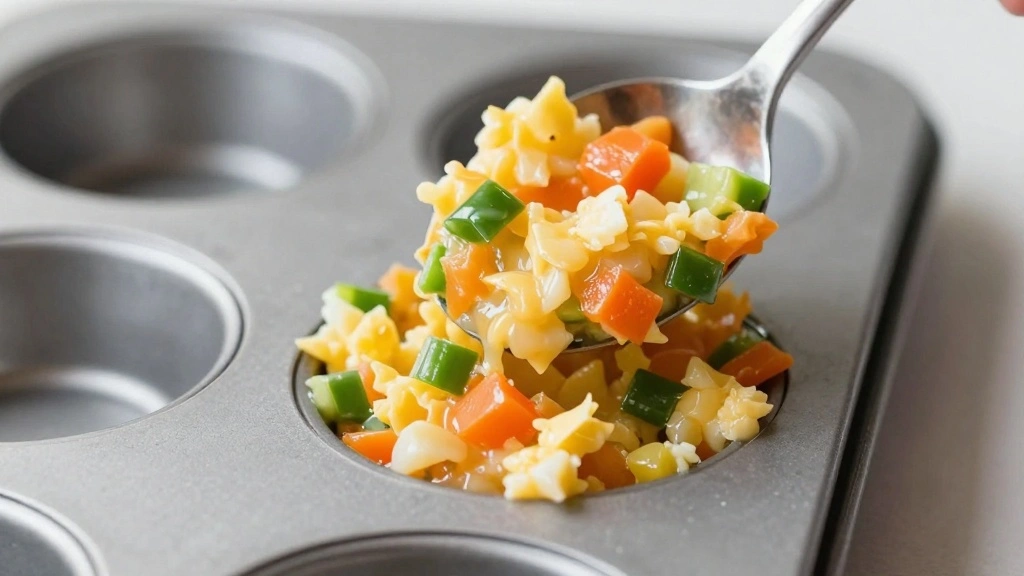
Carefully pour the egg mixture into each muffin cup, filling them about two-thirds full.
Use a ladle or measuring cup for precise pouring and to avoid spills.
Distribute the mixture evenly among the cups for uniform size.
Check for any overflow and adjust as needed.



Step 7: Bake Muffins

Place the filled muffin tin in the preheated oven.
Bake for 18-20 minutes or until the muffins are set and golden on top.
Check for doneness by inserting a toothpick into the center; it should come out clean.
Avoid opening the oven door frequently to maintain consistent heat.


Step 8: Cool and Serve

Remove the muffin tin from the oven using oven mitts.
Allow the muffins to cool in the tin for about 5 minutes.
Carefully remove the muffins from the tin and place them on a wire rack.
Serve warm or store for later consumption.



Critical Timing and Temperature Guide
Baking: Bake at 375°F (190°C) for 18-20 minutes until the muffins are set and golden. Visual indicators include a firm top and a toothpick coming out clean. Avoid underbaking, which results in a runny center.
Cooling: Allow muffins to cool in the tin for 5 minutes to firm up. Overcooling in the tin can cause them to steam and become soggy.
Reheating: Reheat in a 350°F (175°C) oven for 5-7 minutes for best results, ensuring they are heated through without drying out.


Pro Tips for Healthy Breakfast Egg Muffins
• Ingredient Selection: Choose fresh, organic eggs and vegetables for the best flavor and nutritional value, focusing particularly on the quality of the eggs.
• Preparation Secret: Sautéing vegetables briefly before adding them to the mixture can enhance their flavor and prevent excess moisture.
• Temperature Management: Ensure eggs are at room temperature before whisking to achieve a smoother mixture and even cooking.
• Texture Enhancement: Add a small amount of baking powder for extra fluffiness in the muffins.
• Flavor Layering: Incorporate a mixture of cheeses for complexity, such as a blend of cheddar and mozzarella.
• Make-Ahead Strategies: Prepare the egg mixture in advance and refrigerate overnight, allowing for quick assembly in the morning.
• Restaurant-Quality Finishing Touches: Top with a sprinkle of fresh herbs like chives or parsley just before serving for a burst of color and flavor.
• Equipment Optimization: Use a silicone muffin liner for easy removal and cleanup, ensuring the muffins retain their shape.
Troubleshooting Common Issues
• Texture Too Dense: Overmixing the batter can lead to dense muffins; fold ingredients gently to maintain lightness.
• Muffins Sticking to Tin: Insufficient greasing may cause sticking; ensure each cup is well-coated with oil or use silicone liners.
• Uneven Cooking: Overcrowding the oven can disrupt airflow, leading to uneven cooking; bake one tray at a time if necessary.
• Flavor Imbalance: Too much or too little seasoning can affect taste; adjust salt and pepper to your preference and taste the mixture before baking.
• Excess Moisture: Not draining vegetables properly can add excess moisture; ensure vegetables are dry before mixing.
• Overbrowning: Baking at too high a temperature can cause overbrowning; monitor closely and adjust oven settings if needed.
Variations and Regional Differences
• Mediterranean Style: Incorporate feta cheese, sun-dried tomatoes, and olives for a Mediterranean twist, enhancing the dish with bold flavors.
• Mexican Variation: Add jalapeños, black beans, and a sprinkle of cumin for a spicy, robust flavor profile emblematic of Mexican cuisine.
• Italian Influence: Use mozzarella cheese, basil, and cherry tomatoes for an Italian-inspired version, reminiscent of a classic Caprese salad.
• Asian Fusion: Incorporate soy sauce, green onions, and sesame seeds for an Asian-inspired variation that adds umami and depth.
Food Science Behind the Recipe
• Coagulation: Understanding how egg proteins coagulate during cooking helps achieve the desired texture; proper whisking and cooking time are crucial.
• Leavening: Incorporating baking powder can aid in the rising of the muffins, creating a fluffy structure by releasing gas during baking.
• Emulsification: The combination of eggs and milk creates an emulsion that binds ingredients together, affecting the muffins' consistency and stability.


Frequently Asked Questions
What's the most common mistake people make when preparing Healthy Breakfast Egg Muffins? Overmixing the egg mixture, leading to dense muffins. Fold ingredients gently to maintain a light texture.
Can I freeze these muffins? Yes, they freeze well. Allow them to cool completely, then store in airtight containers or freezer bags for up to 3 months.
How can I prevent my muffins from sticking to the pan? Thoroughly grease the muffin tin or use silicone liners to ensure easy removal and maintain muffin shape.
Can I use egg substitutes in this recipe? Yes, egg substitutes can be used, though it may slightly alter the texture and flavor.
What other cheeses work well in this recipe? Mozzarella, feta, and Monterey Jack are excellent alternatives that provide unique flavor profiles.
How can I add more protein to these muffins? Incorporate cooked sausage or bacon pieces to boost protein content without compromising flavor.
Are there vegan alternatives for this recipe? Substitute eggs with a tofu mixture and cheese with nutritional yeast for a vegan-friendly version.
How do I know when the muffins are done? The muffins are done when a toothpick inserted into the center comes out clean and the tops are golden brown.
Serving and Presentation Guide
• Traditional Presentation: Serve warm on a platter, garnished with fresh herbs for a pop of color and flavor.
• Brunch Buffet: Arrange muffins alongside a variety of fruits and pastries, creating an inviting, colorful spread.
• Individual Servings: Plate muffins individually with a side salad or fresh fruit for a balanced meal.
• On-the-Go Packaging: Wrap muffins in parchment paper or place in small containers for convenient, portable breakfasts.
Conclusion
These Healthy Breakfast Egg Muffins are a delicious, nutritious way to start your day.
Their versatility and ease of preparation make them a staple in any kitchen.
Try this recipe and discover how easy it is to enjoy a balanced breakfast, even on the busiest mornings.