
Slow Cooker Recipes: Easy Meals, Less Effort!
Family-friendly dishes for busy people — quick prep, delicious results.
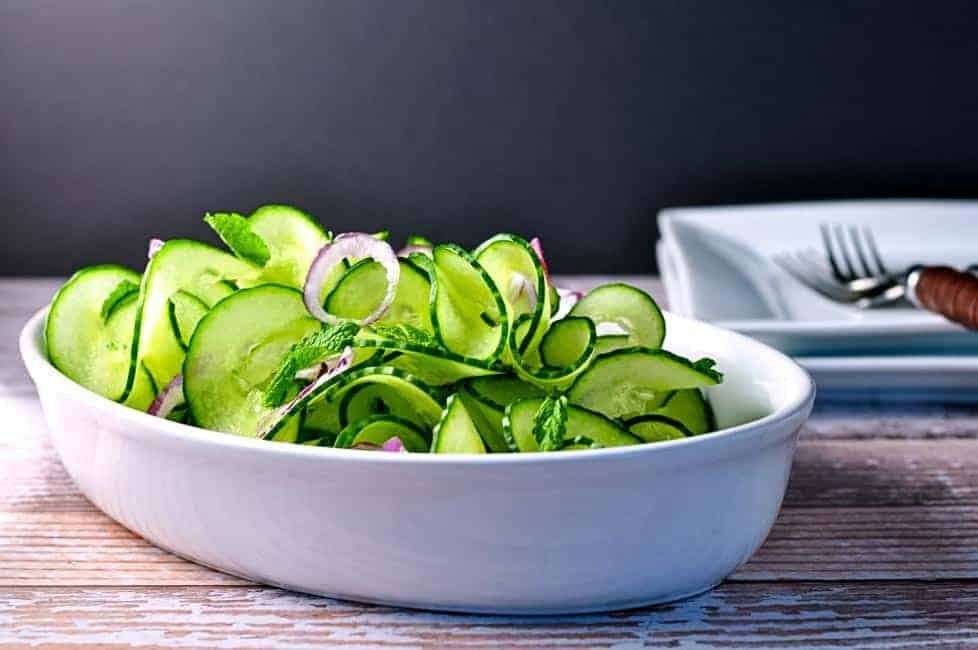
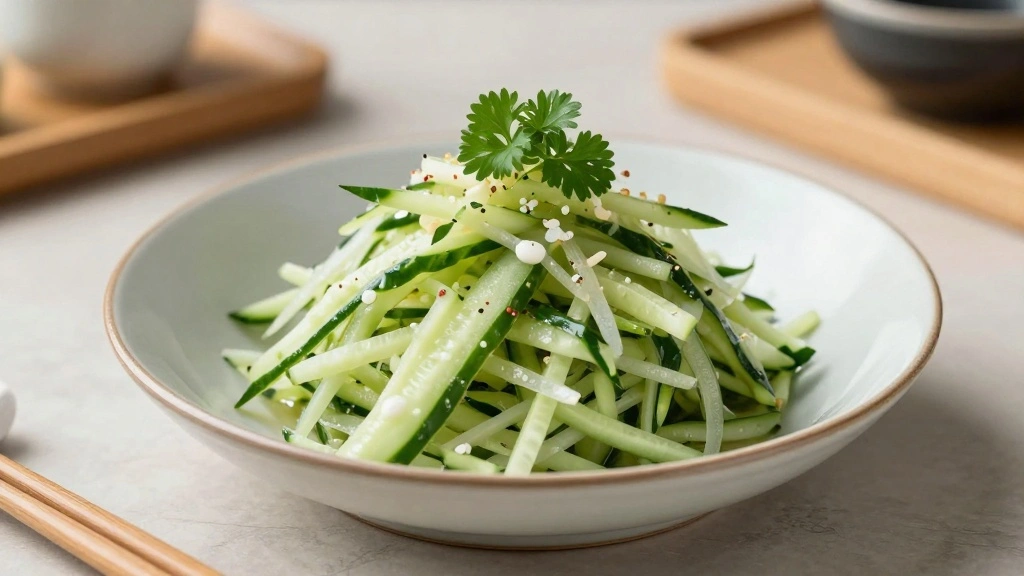
Grab yours for $4Japanese Cucumber Salad, or Sunomono, offers a refreshing culinary journey through its crisp texture and tangy flavor.
This delightful salad perfectly balances the sweetness of rice vinegar with the subtle saltiness of soy sauce.
Sunomono is a staple in Japanese cuisine, often served as a side dish to complement richer, heavier meals.
The combination of cucumbers with a light dressing makes it an ideal dish for hot summer days, providing a cooling effect with every bite.
Whether you’re a seasoned chef or a home cook, this recipe is straightforward and rewarding to prepare.
Experience the simplicity and elegance of Japanese flavors in your own kitchen with this delightful salad.
The History and Cultural Significance
• Japanese Cucumber Salad traces its origins to the Edo period, where it was originally created by home cooks seeking to balance flavors and textures in simple dishes.
• The dish evolved over decades as variations of the vinegar dressing were developed, eventually becoming the beloved version we know today.
• In Japan, this dish traditionally appears at family gatherings and celebrations, symbolizing harmony and simplicity.
• While many variations exist across different regions, the authentic version maintains a delicate balance of sweet, sour, and salty that sets it apart from imitations.


Recipe Overview
Nutritional Information (per serving)
Essential Equipment Guide
Mandoline Slicer: This tool is important for achieving uniformly thin cucumber slices, which ensures even marination and presentation. Alternatives like a sharp knife can work, but may require more skill and time. Look for a mandoline with adjustable thickness settings for versatility.
Mixing Bowl: A medium-sized mixing bowl is essential for evenly combining the ingredients. Stainless steel or glass is preferable for easy cleaning and non-reactivity with acidic ingredients. Ensure the bowl is large enough to toss the salad without spilling.
Whisk: A small whisk is crucial for emulsifying the dressing, ensuring all ingredients are well combined. If a whisk is unavailable, a fork can be used but may take longer to achieve the same consistency. Choose a whisk with a comfortable handle and sturdy wires.


Ingredients
Vegetables
|
| Amount | Ingredient | Notes |
|---|---|---|
| 2 medium | Japanese cucumbers | thinly sliced |
For the Dressing
| Amount | Ingredient | Notes |
|---|---|---|
| 3 tablespoons | rice vinegar | provides a mild tang |
| 1 tablespoon | sugar | adds sweetness |
| 1 teaspoon | soy sauce | for umami flavor |
| 1 teaspoon | sesame oil | adds a nutty aroma |
Garnish
| Amount | Ingredient | Notes |
|---|---|---|
| 1 teaspoon | sesame seeds | toasted for extra flavor |
| 1 tablespoon | wakame seaweed | rehydrated, adds texture |


Preparation Methods
Salting Cucumbers: This technique involves sprinkling salt over cucumber slices to draw out excess water, enhancing the salad's texture and preventing a watery dressing. It matters for maintaining crispness. Let cucumbers sit for 5-10 minutes before rinsing and draining.
Emulsifying Dressing: Whisking the dressing ingredients together until well combined creates a balanced flavor profile. This is crucial for ensuring each bite is consistent. Use a brisk circular motion for best results.
Toasting Sesame Seeds: Gently heating sesame seeds in a dry pan until golden enhances their flavor. This step is important for adding depth to the dish. Stir continuously to prevent burning.



Step 1: Prepare Cucumbers
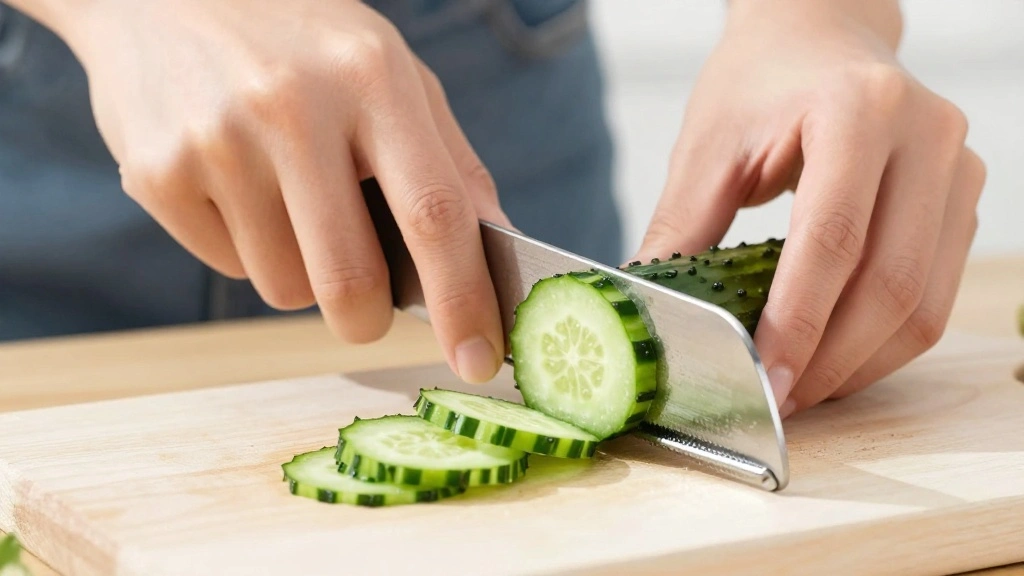
Rinse the cucumbers thoroughly under cold water.
Pat them dry with a kitchen towel to remove excess moisture.
Using a mandoline slicer, cut the cucumbers into thin, even slices.
Ensure uniform thickness to promote even marination.
Step 2: Salt the Cucumbers
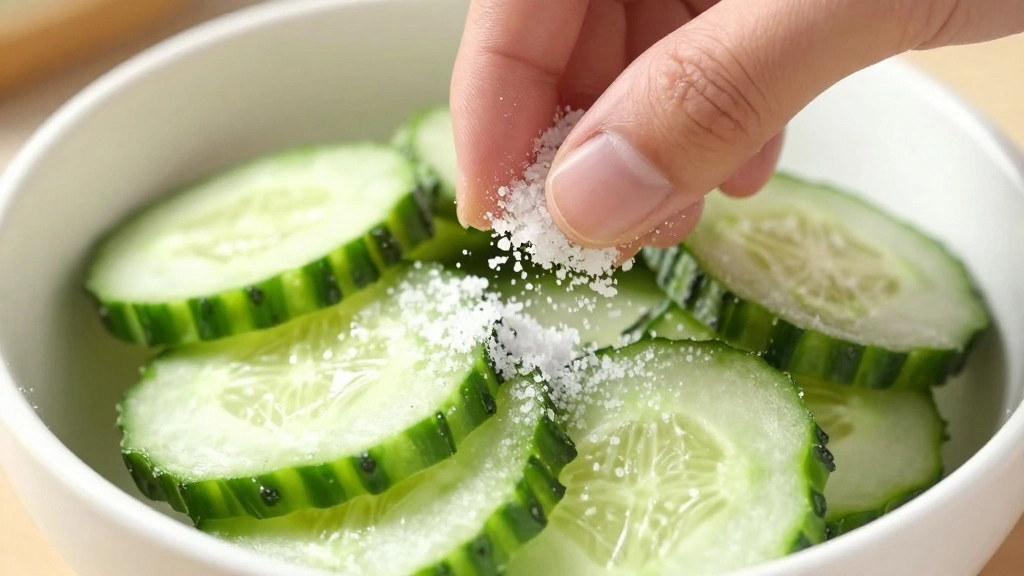
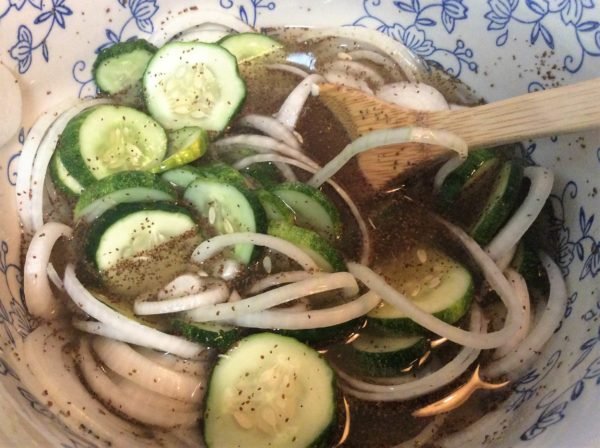
Place the cucumber slices into a bowl.
Sprinkle a small amount of salt evenly over the slices.
Gently toss the cucumbers to distribute the salt.
Let them sit for 10 minutes to draw out excess moisture.



Step 3: Rinse and Drain Cucumbers
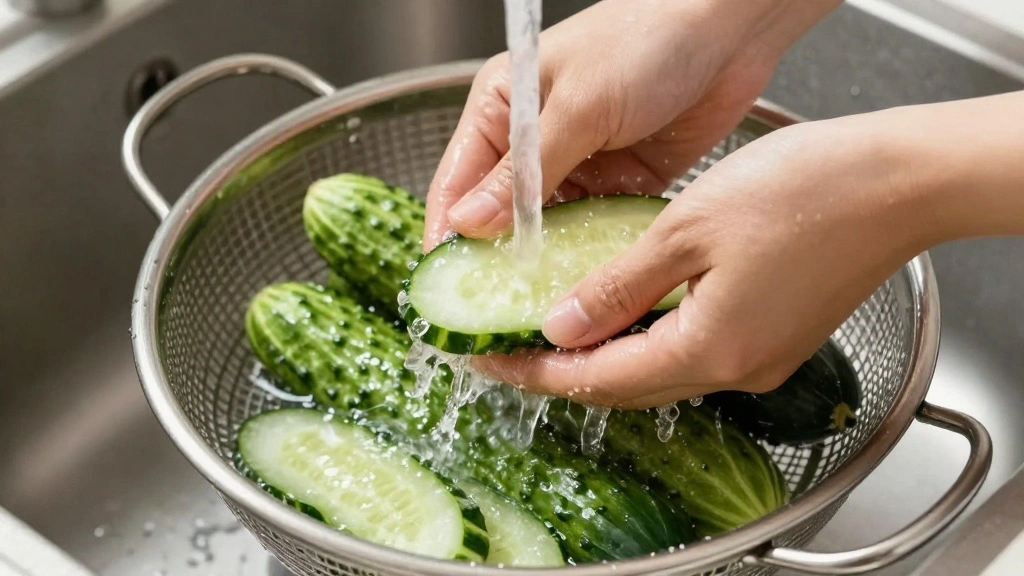
After 10 minutes, rinse the cucumber slices under cold water to remove excess salt.
Drain them well using a colander.
Gently squeeze the cucumbers to remove any remaining water.
This step is important to ensure the salad is not watery.
Step 4: Prepare the Dressing
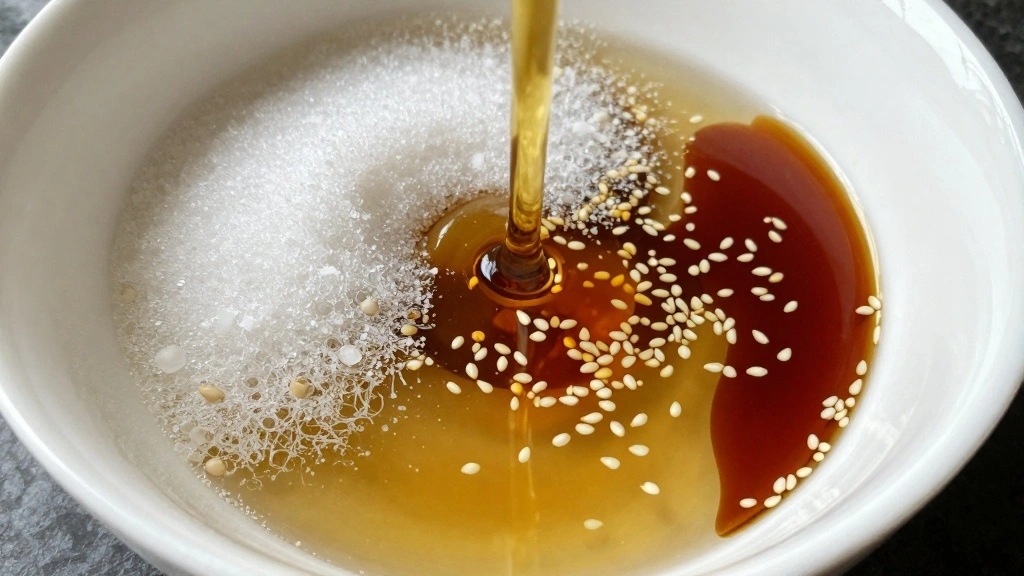
In a small mixing bowl, combine rice vinegar, sugar, soy sauce, and sesame oil.
Use a whisk to mix the ingredients until the sugar is fully dissolved.
The dressing should have a balanced sweet and tangy flavor.
Taste and adjust seasoning if needed.


Step 5: Combine Salad Ingredients
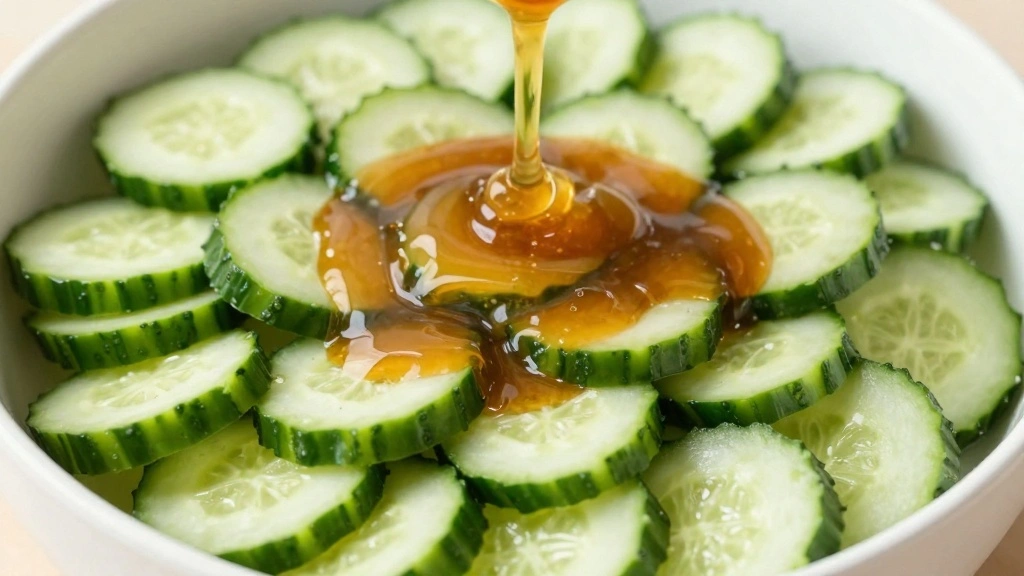
In a large mixing bowl, add the drained cucumber slices.
Pour the prepared dressing over the cucumbers.
Gently toss the cucumbers to evenly coat them with the dressing.
Ensure that each slice is well covered for maximum flavor.


Step 6: Rehydrate Wakame Seaweed
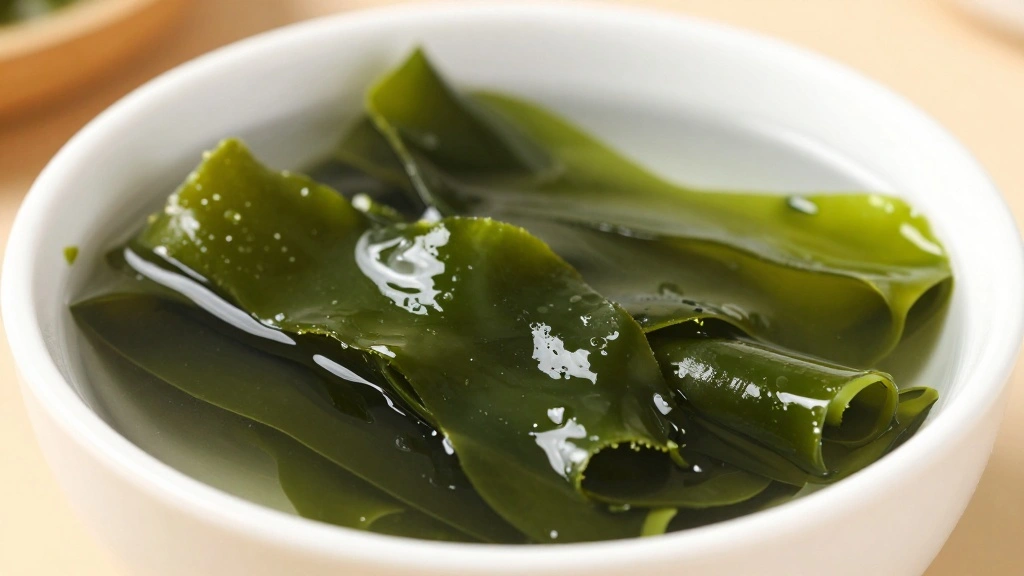
Place wakame seaweed in a small bowl.
Cover it with cold water and let it soak for 5 minutes.
Drain the seaweed and pat dry with a paper towel.
This step adds texture and flavor to the salad.


Step 7: Toast Sesame Seeds
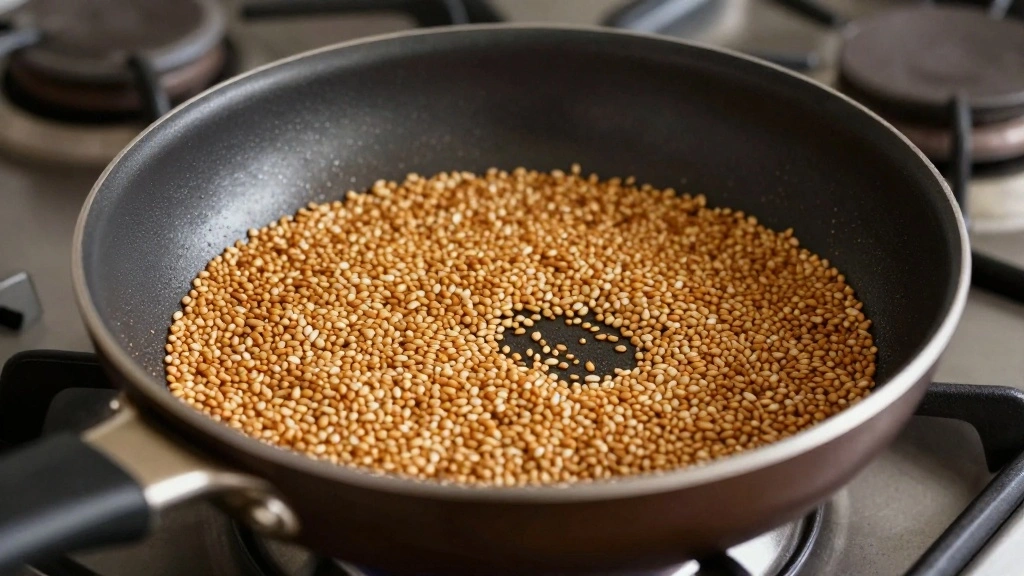
Heat a small pan over medium heat.
Add sesame seeds and stir continuously.
Toast the seeds until they are golden brown and fragrant.
Be careful not to burn them by keeping them moving in the pan.


Step 8: Assemble and Serve
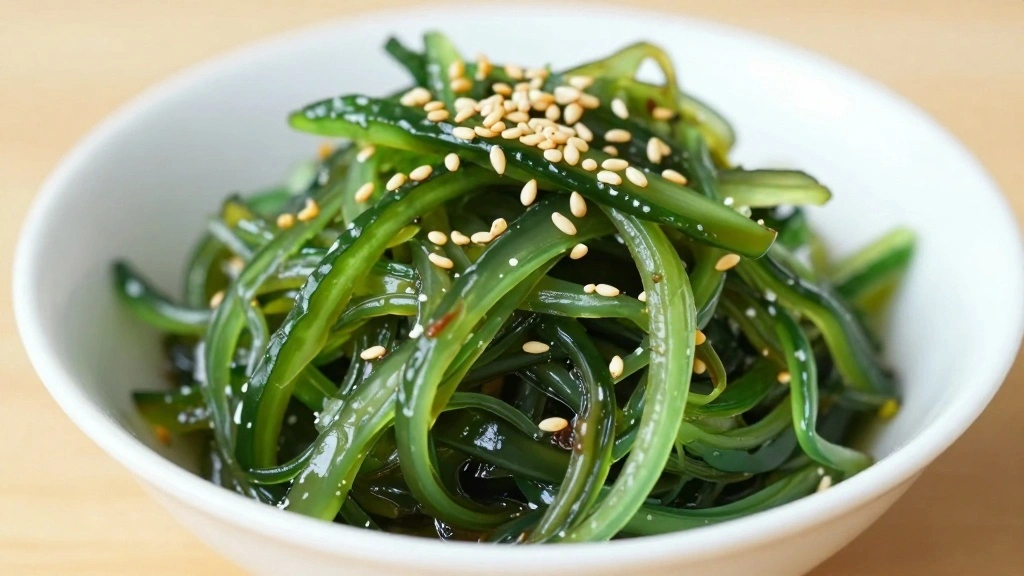
Add the rehydrated wakame seaweed to the cucumber salad.
Sprinkle the toasted sesame seeds over the top.
Toss gently to combine all ingredients.
Transfer to a serving dish and enjoy immediately.


Critical Timing and Temperature Guide
Salting Cucumbers: Allow cucumbers to sit for exactly 10 minutes with salt to draw out moisture without making them too salty. Visual indicator: cucumbers should look slightly wilted.
Toasting Sesame Seeds: Toast sesame seeds for 2-3 minutes over medium heat. Look for a golden brown color and a nutty aroma. Avoid burning by keeping them moving.
Rehydrating Seaweed: Soak wakame in cold water for exactly 5 minutes. Visual indicator: seaweed should be soft and pliable. Avoid over-soaking as it can become mushy.


Pro Tips for Japanese Cucumber Salad
• Ingredient Selection: Choose fresh, firm Japanese cucumbers for the best texture and flavor. Avoid cucumbers with blemishes or soft spots.
• Preparation Secret: A quick rinse and drain after salting cucumbers ensures they remain crispy and not overly salty.
• Temperature Management: Use room temperature ingredients to allow flavors to meld harmoniously.
• Texture Enhancement: Gently squeezing cucumbers after rinsing removes excess water, keeping them crisp.
• Flavor Layering: Allow the salad to sit for 5 minutes after mixing to let flavors develop before serving.
• Make-Ahead Strategies: Prepare the dressing in advance and store in the refrigerator for up to 3 days.
• Restaurant-Quality Finishing Touches: Garnish with additional sesame seeds and a drizzle of sesame oil for a polished presentation.
• Equipment Optimization: Use a mandoline slicer for uniform cucumber slices, which ensures even flavor absorption.
Troubleshooting Common Issues
• Salad Too Watery: This is often caused by not salting cucumbers long enough. Ensure to salt for at least 10 minutes and drain thoroughly.
• Flavors Unbalanced: If the salad tastes too sour, adjust by adding a bit more sugar or soy sauce to balance the acidity.
• Cucumbers Not Crisp: This can occur if cucumbers are not fresh or if they are oversoaked in dressing. Always use fresh cucumbers and serve immediately after dressing.
• Sesame Seeds Burnt: Toast sesame seeds on low heat, constantly stirring to prevent burning. Remove from heat as soon as they turn golden brown.
• Dressing Not Emulsified: Whisk dressing ingredients vigorously until fully combined. If separation occurs, whisk again before using.
Variations and Regional Differences
• Kyoto Style: This variation includes a hint of yuzu zest for a citrusy aroma, adding a unique regional touch.
• Osaka Style: Incorporates thinly sliced radish for added crunch and a slight peppery flavor.
• Tokyo Style: Features a touch of wasabi in the dressing for a slight kick, offering a modern twist on the classic.
• Hokkaido Style: Adds a small amount of grated ginger to the dressing for warmth and depth, reflecting the colder climate.
Food Science Behind the Recipe
• Osmosis: Salting cucumbers draws out excess water through osmosis, enhancing their texture and preventing a watery salad.
• Emulsion: Whisking the dressing creates an emulsion, which helps the oil and vinegar combine smoothly, ensuring consistent flavor distribution.
• Maillard Reaction: Toasting sesame seeds initiates the Maillard reaction, enhancing their nutty flavor and aroma.


Frequently Asked Questions
What's the most common mistake people make when preparing Japanese Cucumber Salad? The most common mistake is not salting the cucumbers long enough, which can result in a watery salad.
Can I make this salad ahead of time? While it's best served fresh, you can prepare the dressing in advance and store it separately.
What can I use instead of Japanese cucumbers? English cucumbers are a good substitute due to their similar texture and flavor.
How do I prevent the sesame seeds from burning? Stir them continuously over medium heat and remove from the pan as soon as they become golden brown.
Why is my dressing separating? Ensure you whisk the dressing ingredients thoroughly to create a stable emulsion.
Can I add other vegetables to the salad? Yes, thinly sliced radishes or carrots can add additional texture and flavor.
What should I do if my salad tastes too salty? Rinse the cucumbers again under cold water to remove excess salt.
How long can I store leftover salad? It's best consumed immediately, but it can be stored in the refrigerator for up to one day.
Serving and Presentation Guide
• Traditional Presentation: Serve in small individual bowls with a sprinkle of sesame seeds on top for a classic look.
• Modern Plating: Arrange cucumbers in a spiral pattern on a flat plate, drizzling dressing over the top for a contemporary touch.
• Family-Style Serving: Present in a large bowl as part of a buffet spread, allowing guests to serve themselves.
• Garnishing Techniques: Add a few shiso leaves as a garnish for a pop of color and an extra layer of flavor.
Conclusion
Japanese Cucumber Salad is a delightful dish that brings the refreshing flavors of Japan to your table.
With its simple preparation and balanced taste, it's perfect for any occasion.
Try this recipe and experience the harmony of flavors that make Japanese cuisine so beloved.
Enjoy the crispness and tanginess of Sunomono as a side dish or a light appetizer.